
The electric vehicle revolution isn’t just about fancy cars; it is happening right now on the busy streets of developing nations and the narrow alleyways of bustling cities. For business owners and distributors, the electric tricycle represents a massive opportunity. It is the workhorse of the future. Whether you are moving passengers in a tuk-tuk or delivering heavy goods, these vehicles are changing how the world moves.
This article is for the entrepreneur who sees the numbers. We are talking about profit margins, shipping efficiency, and building a fleet that doesn’t break down. If you want to understand the difference between losing money on shipping air and maximizing every inch of a 40HQ container, keep reading. We will dive deep into the manufacturing hub of Xuzhou, explain why CKD (Complete Knock Down) is your best friend, and how to pick a machine that survives the roughest roads.
Why is Xuzhou the Global Capital for Electric Tricycles?
When you buy a smartphone, you think of Shenzhen. When you buy an electric cargo trike, you must think of Xuzhou. Located in Jiangsu province, my city is not just a place with factories; it is a massive ecosystem. We don’t just assemble parts here; we make everything from the steel chassis to the smallest bolt. This matters to you because it means speed and consistency.
In Xuzhou, the supply chain is mature. If I need a specific type of heavy-duty shock absorber for a client in Nigeria, I can get it within hours, not weeks. This concentration of industry keeps costs down. We pass those savings to you. You aren’t paying for parts to be shipped across the country before they even get to the assembly line. Everything is right here.
Furthermore, Xuzhou has a culture of heavy machinery. We are famous for construction equipment. This DNA is in our electric tricycles. We build them strong. We know that in many markets, a vehicle rated for 500kg will often carry 800kg. Our welders and engineers design frames that handle this reality. When you import from Xuzhou, you are buying into a history of industrial strength.
CKD vs. SKD: Which Shipping Method Maximizes Your Profit Margin?
Shipping is often the silent killer of profit. I talk to distributors every day who are shocked by ocean freight costs. The solution lies in how we pack the vehicles. You have two main choices: SKD (Semi Knock Down) and CKD (Complete Knock Down). Understanding this difference is key to your bottom line.
SKD means the tricycle is mostly built. The wheels might be off, but the frame and body are together. It is easier for you to finish assembling, but it takes up a lot of space. You might only fit 20 units in a container. This drives your shipping cost per unit sky-high.
CKD is where the real money is made. We take the vehicle apart completely. The frames are stacked, the panels are nested, and the small parts are boxed. In a standard 40HQ container, we can often fit 40 to 60 units depending on the model. This cuts your freight cost per vehicle in half. Yes, you need a local team to assemble them, but the savings on shipping and lower import tariffs (since they are "parts," not "vehicles") are massive.
How Do We Ensure Heavy-Duty Chassis Durability for Rough Roads?
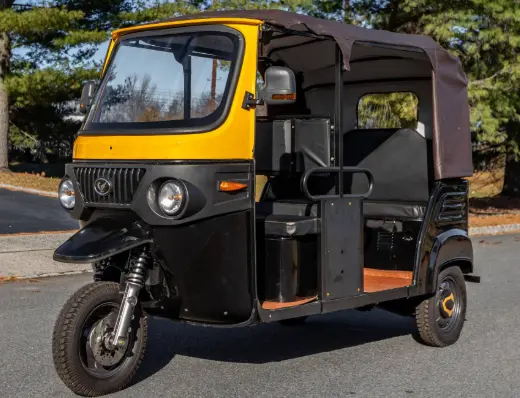
I know that the roads in many of our target markets are not perfect. Potholes, dirt tracks, and mud are common. A standard frame will crack under pressure. That is why the chassis is the most critical part of an electric cargo tricycle. We use a process called electrophoresis painting on our frames, similar to cars, to prevent rust. But before paint, it starts with the steel.
We use thickened steel tubes for the main beam. We don’t just weld it once; we use reinforced welding at high-stress points. Think of the connection between the driver’s cabin and the cargo box. This is where the frame snaps if it is weak. We add extra steel plates there.
If you are looking for a robust solution for transporting goods, you should look at the Electric cargo tricycle HJ20. It is designed specifically to handle these stresses without bending. A strong chassis means your customer doesn’t call you in three months with a broken vehicle. It builds your reputation for quality.
Lead-Acid vs. Lithium: Which Battery Technology Suits Your Market?
The battery is the heart of the trike. It is also the most expensive consumable part. You have two main choices: Lead-Acid and Lithium-ion. Most of our volume orders for cargo uses are Lead-Acid batteries. Why? Because they are cheap, reliable, and heavy (which actually helps with stability). They are easy to recycle in many countries. For a farmer or a delivery driver on a budget, this is usually the right choice.
However, the world is changing. Lithium batteries are lighter, charge faster, and last three times longer. If you are running a taxi fleet where the vehicle runs 20 hours a day, Lithium is better. You can swap them out quickly. They cost more upfront, but over two years, they might be cheaper.
You need to know your customer. Are they looking for the lowest initial price, or the lowest long-term cost? We supply both, but I always advise testing your local market first. Don’t import a container of expensive lithium trikes if your customers only have the budget for lead-acid.
What Should You Look for in an Electric Cargo Tricycle Supplier?
Finding a supplier is easy. Finding a partner is hard. A bad supplier will send you a container of parts with missing screws. A bad supplier will ignore you when a controller burns out. You need a manufacturer who acts like a partner in your business.
Look for these three things:
- Spare Parts Support: Do they send 1% or 2% free wearing parts (like brake shoes and bulbs) with the container? We do.
- Assembly Guidance: Do they have videos or manuals? assembling a CKD kit without a guide is a nightmare. We provide step-by-step video support.
- Customization: Can they change the color or the logo? Can they make the cargo box 10cm taller? A real factory can do this. A middleman cannot.
For example, if you are into logistics, check out our Van-type logistics electric tricycle HPX10. We can customize the box size to fit specific delivery crates. This flexibility helps you sell more units.
How Can You Solve Common Assembly Issues with Your Local Team?
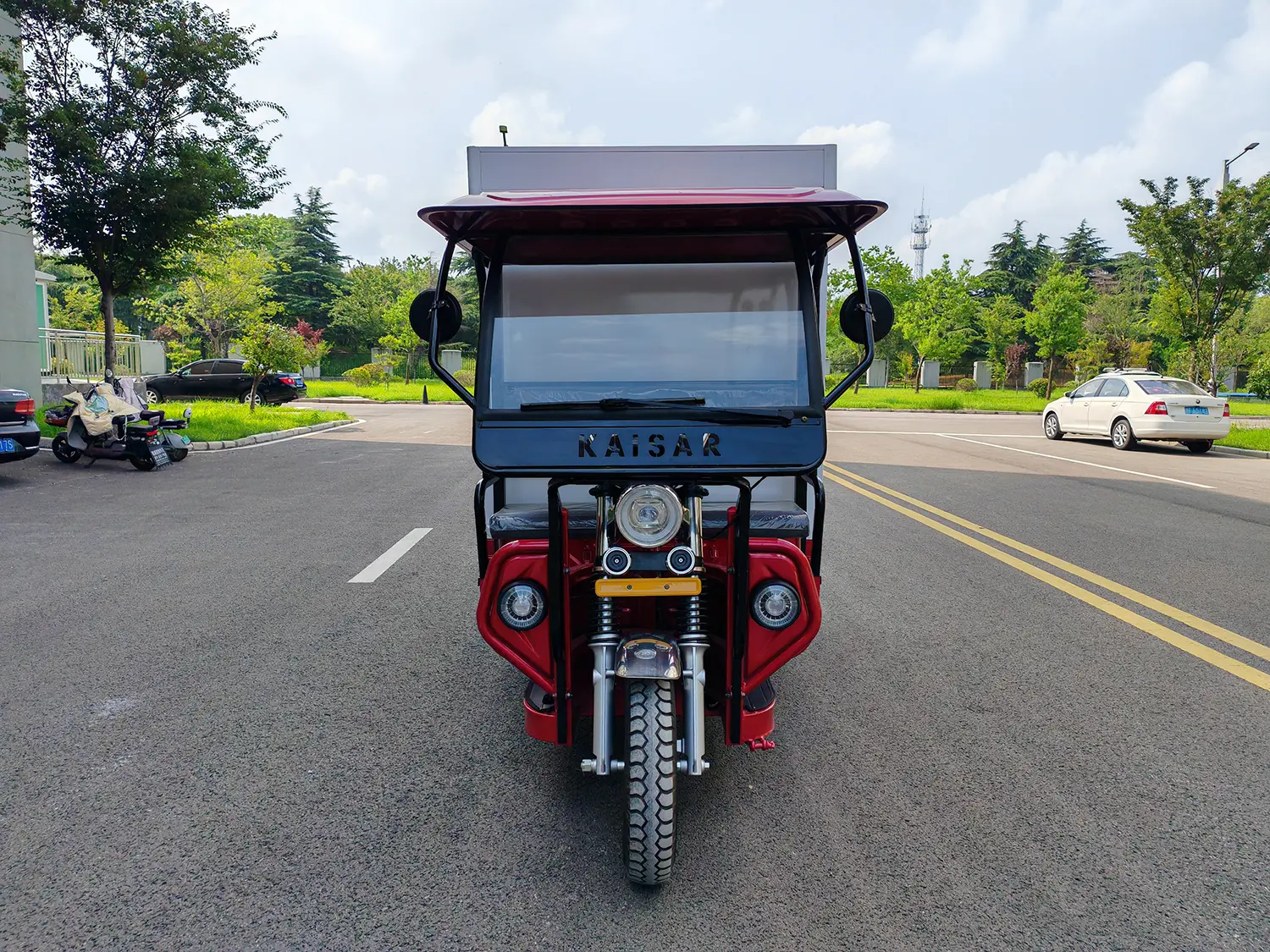
When your container arrives, the panic can set in. You have hundreds of boxes. The most common issue is organizing the workflow. If you mix up the bolts for the passenger tricycle with the cargo trike, you are in trouble.
I always tell my clients: create a system. Unload the chassis first. Then the axles. Then the body panels. Keep them separate. The biggest pain point is usually the wiring harness. It can look like spaghetti. We label our wires to make this easier, but your team needs to be patient.
Another tip is to have a "master builder." Train one guy to be the expert. Let him watch our videos. Then, let him teach the others. If you are assembling a complex model like the EV5 Electric passenger tricycle, having a skilled technician prevents damage to the plastic body parts during assembly.
Why is the Motor and Controller Match Critical for Hill Climbing?
Power isn’t just about the motor size. You can have a big 1500W motor, but if the controller is weak, the trike will struggle on hills. It’s like having a bodybuilder with a small heart. The controller decides how much current goes to the motor.
In Xuzhou, we match these carefully. For hilly areas, we use a "high-torque" setup. This might mean a slightly lower top speed, but much more pushing power. We also use a rear axle with a gear shift (a low-range gear). This acts like 4-low in a jeep.
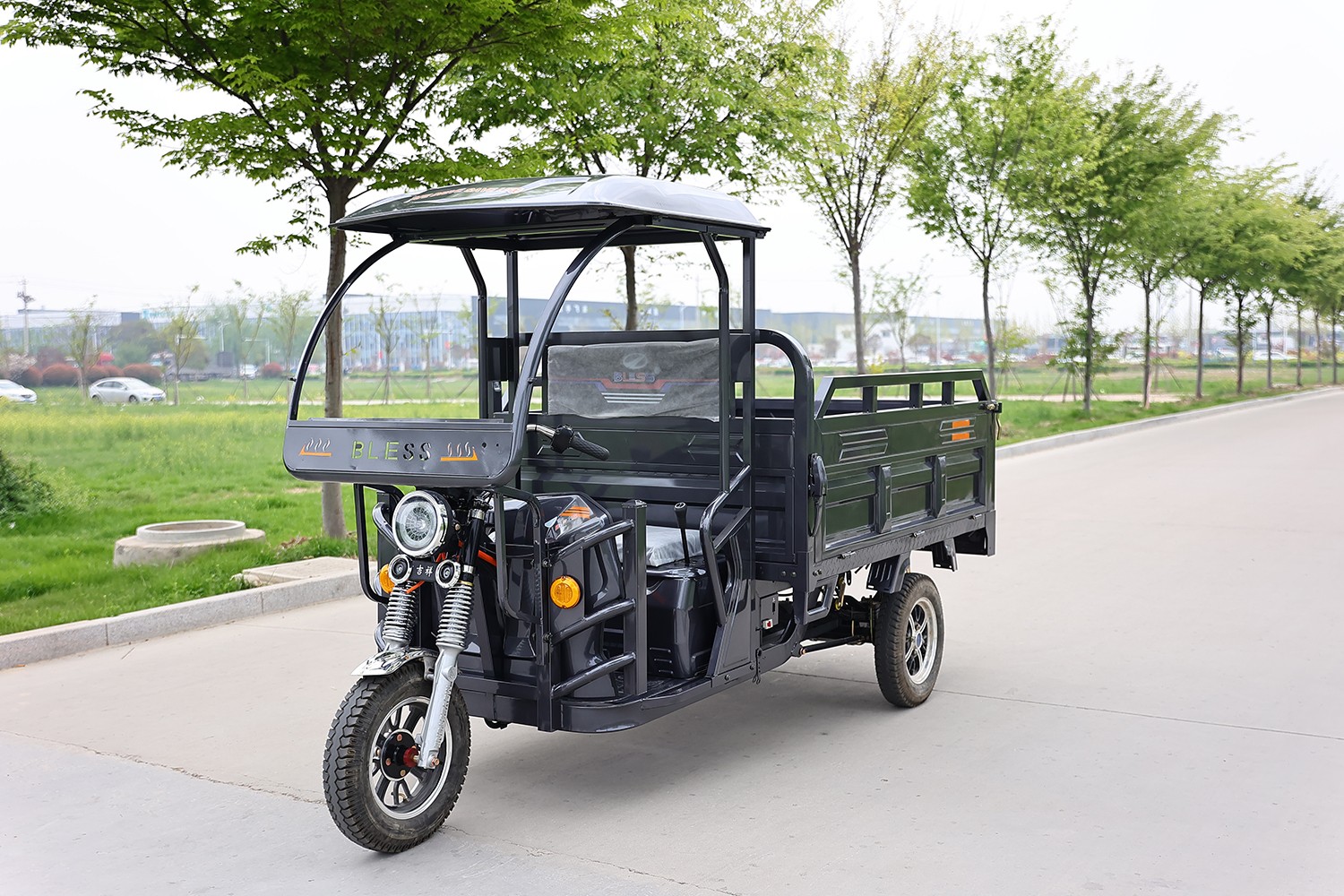
When you drive a fully loaded Electric cargo carrier tricycle HP10 up a steep slope, you simply shift the lever. The torque doubles. The motor doesn’t overheat. This simple mechanical feature saves the electrical system from burning out. Always ask your supplier about the "climbing gear."
What Spare Parts Should You Stock to Keep Your Fleet Running?
Nothing kills a logistics business faster than downtime. If a driver can’t work because of a broken brake cable, he is losing money, and so are you. As a distributor, your spare parts inventory is your safety net.
Essential parts to stock:
- Controllers: These are sensitive to voltage spikes.
- Throttles: Drivers twist them hard all day; they wear out.
- Brake Shoes: This is a safety item.
- Tires and Tubes: Rough roads eat rubber.
- Headlights and blinkers: Often broken in minor traffic bumps.
We recommend ordering a specific "parts package" with every container. Don’t wait until something breaks to order it from China. That takes too long. If you are dealing with specialized units like the Van-type refrigerated electric tricycle HPX20, you also need to think about cooling system parts. Being prepared makes you the most reliable dealer in town.
How Do We Handle Quality Control Before the Container Leaves China?
You might worry that because you are buying CKD (parts), we don’t check the quality. This is not true. We actually assemble a percentage of every batch to test them. We check the welding spots. We run the motors. We test the waterproof seals on the controllers.
Then, we disassemble them for packing. We also have a counting system for the small parts. We weigh the boxes of screws. If a box is 10 grams too light, we know a screw is missing. We fix it before it is taped shut.
We know that receiving damaged goods is frustrating. We use bubble wrap and cardboard separators to stop metal from scratching metal. We pack the heavy motors at the bottom and the fragile plastics at the top. It is a game of Tetris, and we are experts at it.
What is the Future of Last-Mile Delivery with Electric Trikes?
The future is bright, and it is silent. Cities are banning gas motorcycles and old trucks. They are too noisy and too dirty. The electric tricycle is the answer. It fits in narrow streets. It parks easily. It costs pennies to run compared to a petrol van.
We are seeing a huge demand for closed-box trikes for e-commerce delivery. Amazon, DHL, and local couriers are all switching. The technology is getting better too. Digital displays, GPS tracking, and better suspension are becoming standard.
By entering this market now, you are positioning yourself at the start of a massive wave. Whether it is a simple cargo carrier or a sophisticated passenger vehicle like the Electric passenger tricycle (African Eagle K05), the demand is growing. You are not just selling a vehicle; you are selling a solution to modern transport problems.
Key Takeaways for Your Import Business
- Choose Xuzhou: The industrial ecosystem ensures better parts availability and lower costs.
- Go CKD: It requires local assembly, but the shipping and tax savings will double your margins.
- Match the Battery: Use Lead-Acid for economy and Lithium for high-usage fleets.
- Focus on Chassis: Ensure the frame is reinforced to handle bad roads and overloading.
- Stock Spares: Keep controllers, throttles, and tires in stock to keep your customers on the road.
- Verify the Supplier: Look for customization options and strong after-sales support (manuals/videos).
- Use the Low Gear: Ensure your cargo trikes have a gear shift for climbing hills with heavy loads.
Post time: 01-27-2026