

A tricycle is not automatically a taxi. A tricycle describes the vehicle’s basic design: it has three wheels. A taxi describes a passenger transport service that carries customers for a fare.
When a three-wheeled vehicle is licensed, operated, and used to transport paying passengers, it can be called a tricycle taxi. In different regions, these vehicles may also be known as tuk-tuks, auto rickshaws, motorized tricycles, cycle rickshaws, or pedicabs.
What Is a Tricycle?
A tricycle is any vehicle with three wheels. It may be powered by pedals, an internal-combustion engine, an electric motor, or another power source.
Tricycles can be designed for many purposes, including:
- Personal travel
- Passenger transport
- Cargo delivery
- Tourism
- Mobility support
- Small-business operations
- Public or shared transport
This means a tricycle may be privately owned, commercially operated, or used as a public-service vehicle.
What Makes a Tricycle a Taxi?
A tricycle becomes a taxi when it provides paid passenger transport under the rules that apply in its local area.
A tricycle taxi typically has:
- A driver or operator
- Passenger seating
- A defined operating area or route
- A fare or fare system
- Required registration, permits, or local authorization
- Safety equipment appropriate for passenger use
The exact legal definition varies by country, city, and transport authority. In some places, a tricycle taxi operates like an on-demand taxi. In others, it follows fixed routes, serves short-distance trips, or waits at designated transport stands.
Types of Tricycle Taxi Services
Motorized Tricycle Taxis
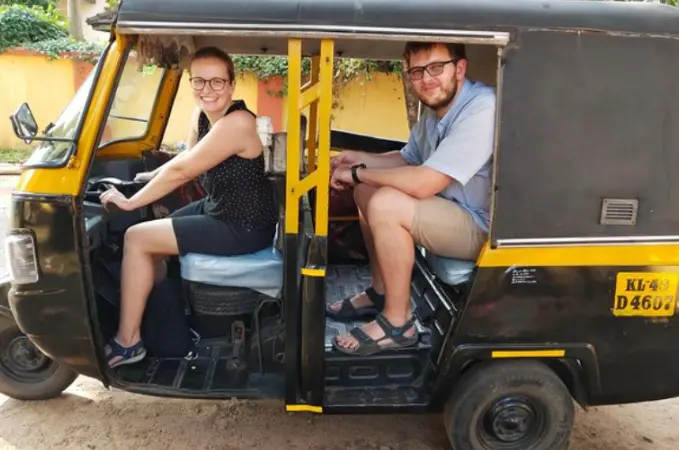
Motorized tricycle taxis use a motorcycle engine or electric drivetrain. They are common in areas where narrow roads, traffic congestion, and short travel distances make large vehicles less practical.
These vehicles often have a covered passenger cabin behind or beside the driver. They can provide last-mile transport between homes, markets, bus terminals, schools, and commercial districts.
Electric Tricycle Taxis
Electric tricycle taxis use battery power instead of a gasoline engine. They can reduce local tailpipe emissions and operating noise, making them attractive for urban districts, tourist areas, campuses, and short-route transport.
Their real-world suitability depends on battery capacity, charging access, passenger load, terrain, climate, maintenance, and local regulations.
Pedal-Powered Tricycle Taxis
Pedal-powered tricycle taxis are human-powered and may be used for short trips, tourism, or local transport in areas with lower speeds and suitable road conditions. They are often valued for low operating costs and minimal emissions.
Why Tricycle Taxis Are Important
A tricycle taxi can fill an important mobility gap. It is often more agile and less expensive to operate than a conventional car taxi, while offering more passenger capacity and weather protection than a bicycle.
Common advantages include:
- Efficient travel on narrow or congested streets
- Lower purchase and operating costs than larger vehicles
- Short-distance and last-mile transport capability
- Flexible use in commercial districts and neighbourhoods
- Potential for electric mobility adoption
- Income opportunities for owner-operators
For many communities, tricycle taxis connect passengers to larger transport networks, including bus stations, rail terminals, ferry ports, and markets.
Are Tricycle Taxis Safe?
Safety depends on vehicle design, maintenance, driver training, passenger capacity, road conditions, speed limits, and enforcement of local transport regulations.
A well-operated tricycle taxi should have secure passenger seating, stable braking, effective lighting, visible signaling, appropriate weather protection, and regular inspections. Overloading, poor maintenance, unsafe modifications, and reckless driving can increase risk.
Passengers should use available restraints where fitted and follow local safety rules. Operators should never exceed the vehicle’s rated passenger or cargo capacity.
Tricycle Taxi vs. Conventional Taxi
A conventional taxi is usually a four-wheeled car that carries passengers on demand. A tricycle taxi uses a three-wheeled platform and is often optimized for shorter trips, lower-speed roads, and dense urban environments.
Both may provide paid passenger transport, but they differ in size, operating range, seating layout, comfort, and regulatory requirements. The key point is that “taxi” describes the passenger service, while “tricycle” describes the vehicle configuration.
Conclusion
A tricycle is not automatically a taxi. It becomes a tricycle taxi when it is used and authorized to carry paying passengers. Whether powered by pedals, fuel, or electricity, these three-wheeled vehicles can provide practical, accessible transport for short urban and local journeys.
For operators and buyers, the most important considerations are local regulations, passenger safety, vehicle quality, operating costs, and the transport needs of the community.
Post time: 07-22-2026