

A motorized tricycle — whether electric or gasoline-powered — is one of the most practical vehicles on the market for last-mile delivery, passenger transport, and family mobility. But before you buy, the first question is always the same: how much does a motorized tricycle cost?
The honest answer is that prices vary widely, from about $1,500 for a basic electric cargo trike to $10,000 or more for a commercial passenger or heavy-duty model. Your final cost depends on the type, power system, battery capacity, build quality, and where you buy it.
This guide breaks down the real-world motorized tricycle price range by category, explains what you are actually paying for, and shows you the hidden costs most first-time buyers forget.
The Short Answer
| Tricycle Type | Typical Price Range | Best For |
|---|---|---|
| Electric cargo tricycle | $1,500 – $4,000 | Delivery, light hauling |
| Recreational / commuter e-trike | $1,200 – $3,000 | Personal mobility, seniors |
| Passenger tricycle (e-rickshaw) | $2,500 – $6,000 | Passenger transport |
| Gasoline three-wheeler | $3,000 – $8,000 | Heavy loads, rough roads |
| Commercial / industrial trike | $5,000 – $15,000+ | Fleet operations, large payloads |
Prices are typical market estimates; exact figures vary by brand, configuration, and region.
What Determines the Price of a Motorized Tricycle?
Several factors push the price up or down more than any other:
1. Electric vs. Gasoline Power
- Electric tricycles are cheaper to buy and run, quieter, and simpler to maintain. Most fall in the $1,200 to $6,000 range.
- Gasoline models cost more upfront — typically $3,000 to $8,000 — but offer longer range and faster refueling for heavy or continuous use.
2. Battery Size and Motor Power
For electric models, the battery is the single most expensive component:
- 48V / 500W systems — entry-level, good for flat terrain and light loads.
- 60V / 800–1000W systems — the most popular mid-range choice for daily cargo work.
- 72V / 1500W+ systems — high power for hills, heavy payloads, and long shifts.
A larger battery (for example, 20Ah vs. 32Ah) can add $200 to $600 to the price, and it is worth every cent if you depend on range.
3. Payload Capacity and Frame
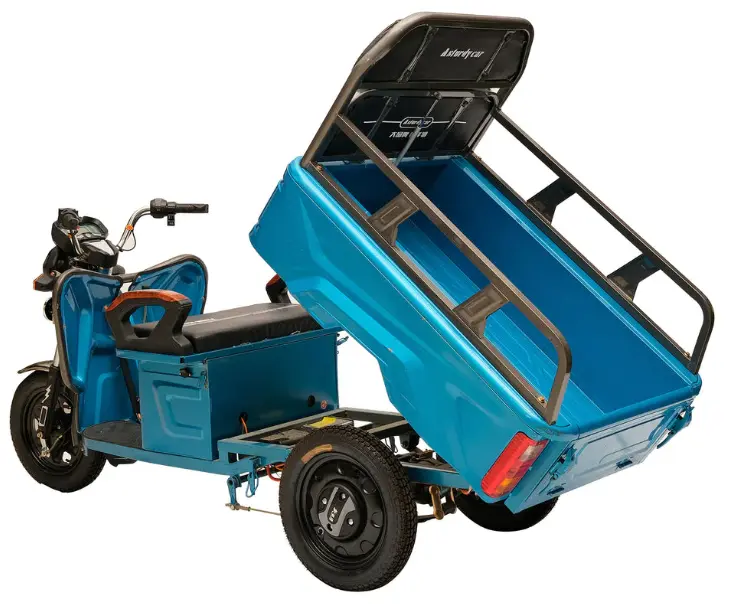
A tricycle rated for 150 kg costs less than one rated for 500 kg. Heavy-duty frames, reinforced axles, and industrial tires all add cost — and all matter if you carry real cargo daily.
4. Cabin, Comfort, and Features
Enclosed cabins, suspension, LED lighting, digital dashboards, reversing cameras, and hydraulic brakes push the motorized tricycle price up, but they also turn a basic work vehicle into a comfortable daily driver.
5. Brand, Certification, and Warranty
Established manufacturers with certified components, documented quality control, and real warranties cost more than unbranded imports. For commercial use, the difference is worth paying.
Cost Breakdown: What Are You Paying For?
For a typical mid-range electric cargo tricycle priced around $2,500, here is roughly where the money goes:
| Component | Approx. Share of Cost |
|---|---|
| Battery pack | 25–35% |
| Motor and controller | 15–20% |
| Frame, suspension, tires | 20–25% |
| Brakes, electronics, lighting | 10–15% |
| Assembly, testing, warranty | 10–15% |
This is why two tricycles that "look the same" can differ by 50% in price — the battery quality, motor brand, and frame materials are usually where the difference hides.
Hidden Costs Most Buyers Forget
The sticker price is only part of the total investment. Budget for these as well:
- Shipping and import duties — often $300 to $1,200 depending on destination and container or LCL shipping.
- Registration and licensing — requirements vary by country; some regions classify electric trikes as bicycles, others require full vehicle registration.
- Insurance — commercial passenger trikes usually need liability coverage.
- Maintenance and spares — factor in tires, brake pads, and battery replacement. A quality battery typically lasts 2–4 years under daily use.
- Charging or fuel — electric models cost far less per kilometer, but plan the charging setup if you run a fleet.
When you compare quotes, ask the supplier for a full landed-cost estimate — vehicle price plus freight, duties, and port fees — so the final motorized tricycle price is not a surprise.
Electric vs. Gasoline: Which One Should You Buy?
表格
| Consideration | Electric | Gasoline |
|---|---|---|
| Upfront cost | Lower | Higher |
| Running cost | Very low | Moderate |
| Noise | Quiet | Loud |
| Maintenance | Simple | More frequent |
| Range | Battery-limited | Fuel-limited (quick refill) |
| Best use | Urban delivery, light cargo | Rural routes, heavy loads, long distances |
If your routes are urban, flat, and predictable, an electric tricycle is almost always the better value. If you carry very heavy loads over long distances in areas with poor charging infrastructure, a gasoline model may still make sense.
How to Get the Best Price
- Define your real needs first — payload, daily distance, terrain, and passenger count. Do not pay for capacity you will never use.
- Compare three to five suppliers — request itemized quotes including battery specs (Ah), motor power (W), and chassis details, not just a single price.
- Ask about certification — for commercial use, confirm compliance with local vehicle standards.
- Check warranty terms — what is covered on the battery, motor, and frame, and for how long.
- Test before you buy — if possible, test-ride with a loaded basket to check stability and braking.
- Buy from a manufacturer directly — cutting out middlemen can reduce the motorized tricycle price by 10–30% on bulk orders.
Frequently Asked Questions
Q: How much does an electric tricycle cost? A: Typically $1,200 to $6,000. Entry-level cargo and commuter e-trikes start around $1,200–$1,800, while high-capacity or passenger models reach $4,000–$6,000.
Q: What is the cheapest motorized tricycle? A: Basic electric cargo tricycles with small batteries and 500W motors can be found from around $1,200–$1,500, though shipping and duties often add several hundred dollars.
Q: Why are some motorized tricycles so expensive? A: Price differences come from battery capacity, motor power, frame quality, cabin features, brand certification, and warranty. A $1,500 trike and a $4,000 trike may look similar but perform very differently under daily load.
Q: Are electric tricycles cheaper to run than gasoline ones? A: Yes. Electricity costs a fraction of fuel per kilometer, and electric drivetrains need far less maintenance. Over 2–3 years, the running-cost savings can offset the entire purchase price difference.
Q: How much does shipping a tricycle cost? A: Depending on destination, shipping and import costs typically range from $300 to $1,200 per unit, with bulk container shipments lowering the per-unit cost significantly.
Final Verdict
The motorized tricycle price ranges from about $1,500 for a basic electric cargo model to $10,000+ for commercial-grade vehicles. There is no single "correct" price — the right one depends on your payload, range, terrain, and whether you are buying one unit or a fleet.
Buy smart: match the spec to the job, compare itemized quotes, include shipping and duties in your budget, and buy from a manufacturer you can trust for quality and support.
Looking for reliable motorized tricycles at competitive factory prices? Our team at autotrikes.com supplies electric and gasoline tricycles for cargo, passenger, and commercial use — contact us here for a detailed quote with shipping options.
Post time: 09-12-2026