
Urban mobility is changing rapidly. As a factory director who has spent years overseeing the manufacturing of electric tricycles, I have witnessed a global shift in how people move through crowded cities. We are moving away from noisy, polluting engines toward cleaner, quieter solutions. However, one iconic vehicle remains central to this story: the rickshaw. Whether you know it as an auto rickshaw, a tuk tuk, or simply a three-wheeler, these vehicles are the backbone of transport in many nations. This article will take you on a journey through the history, design, and electric future of these three-wheelers. For business owners and fleet managers, understanding this evolution is key to finding efficient transport solutions.
What is the Difference Between a Rickshaw, an Auto Rickshaw, and a Tuk Tuk?
It can be confusing when you hear terms like rickshaw, auto rickshaw, and tuk tuk used interchangeably. While they are related, there are key differences. Historically, a rickshaw referred to a two-wheeled cart pulled by a person. Later, these evolved into cycle rickshaws, which are pedal-powered. These are still a common sight in some parts of the world, offering a slow, eco-friendly way to travel over short distances.
The auto rickshaw is the motorized version. It usually has three wheels, a canvas roof, and a small cabin for the driver and passengers. So, where does the name tuk tuk come from? It is actually onomatopoeia! The name comes from the loud "tuk-tuk-tuk" sound made by the old two-stroke engines that used to power them. While auto rickshaws are called different things in different places—like a baby taxi in Bangladesh or a bajaj in Indonesia—tuk tuk is perhaps the most famous nickname globally.
Today, tuk-tuks are evolving. The noisy engines are being replaced. We are seeing a shift toward four-stroke engines, CNG (Compressed Natural Gas), and, most importantly, electric motors. As a manufacturer, I see the term tuk tuk now being used to describe even the modern, quiet electric versions. Whether you call them rickshaws or tuk-tuks, they serve the same purpose: moving people and goods efficiently through city streets.
How Did the Humble Rickshaw Motorize and Evolve Over Time?
The journey to motorize the rickshaw is fascinating. It started with the need for speed and less human effort. After World War II, the need for cheap transportation was high. Italy gave the world the Piaggio Ape, a three-wheeled light commercial vehicle based on a scooter. This design inspired many manufacturers.
In the late 1950s and 1960s, the Indian Bajaj brand (Bajaj Auto) began producing auto-rickshaws under license. This changed everything for cities like Delhi and Mumbai. Suddenly, there was a mode of transportation that was cheaper than a taxi but faster than a bicycle. Bajaj became a household name. These early models were simple, rugged, and easy to repair.
Over decades, tuk tuks have evolved. The traditional auto rickshaws had simple cabins and basic seating. Now, we see auto rickshaw designs that focus on comfort and safety. In the Philippines, the evolution took a different path with the traysikel or traysikol, which involves a sidecar fitted to a motorbike. In Delhi, there was once a larger, Harley-Davidson-based vehicle known as the phat-phati, though these are gone now. The drive to motorize has always been about doing more work with less cost.
Why are Tuk Tuks a Common Sight in Cities Like Bangkok and Delhi?
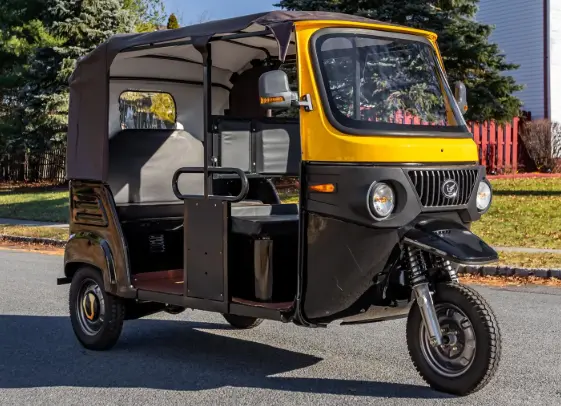
If you visit Southeast Asia or South Asia, the tuk tuk is ubiquitous. In cities like Bangkok, the tuk tuk is a cultural icon. It is often brightly colored, decorated with lights, and serves as both a taxi service for locals and a fun ride for tourists to see the city in style.
In Delhi and Mumbai, the auto rickshaw is an essential part of the daily commute. They bridge the gap between buses and private cars. The reason they are so popular in these regions is their size. Three-wheeled vehicles can weave through heavy traffic much better than a car. They can turn in tight spaces and park almost anywhere.
In Thailand, the tuk tuk often has a more open design to deal with the heat. In India, the auto typically has a black and yellow or green and yellow color scheme, regulated by the government. In Pakistan, they are everywhere, often beautifully decorated. The tuk tuk works because it fits the environment. It is the perfect solution for crowded streets.
What Are the Most Common Auto Rickshaw Designs Used Around the World?
Auto rickshaw designs vary greatly depending on the country. The most standard design, popularized by Bajaj Auto and Piaggio Ape, features a single front wheel and two rear wheels. The driver sits in the front cabin, with a handlebar for steering (like a scooter). Behind the driver is a passenger compartment that typically holds three passengers in the back.
However, there are variations:
- The Sidecar Style: As seen in the Philippines (traysikel), this is a motorcycle with a passenger or cargo sidecar fitted to the side.
- The Rear-Loader: In some places, the usual design is a passenger cabin, but others have a cargo bed for goods.
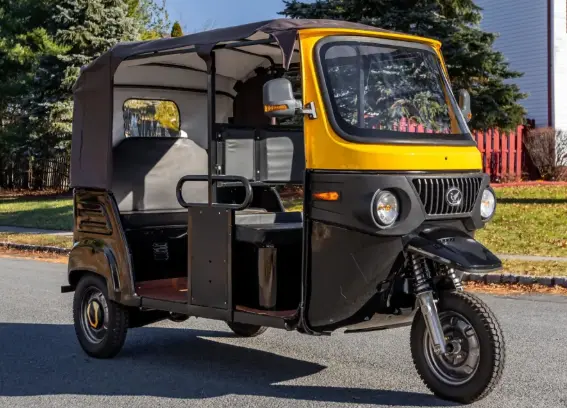
- The Electric Tricycle: This is where my factory specializes. We use a similar three-wheel chassis but replace the engine with a battery and motor, often with a more enclosed, car-like body.
Some older, larger versions in India featured a passenger cabin mounted on a chassis that looked more like a chopped-off jeep. In Africa, specifically in the capital Khartoum (Sudan) or in Egypt (where it is called a gari or toktok), the Indian Bajaj design is the standard. No matter the shape, the goal is the same: efficient three-wheeled transport.
How Did Environmental Concerns Lead to the Rise of CNG and Electric Rickshaws?
For years, the two-stroke engines of older tuk-tuks were a major source of air pollution. Blue smoke and loud noise were the norm. As air quality deteriorated in mega-cities, governments had to act. Environmental concerns became the primary driver for change.
In India, the Supreme Court of India made a landmark ruling that forced commercial vehicles in Delhi to switch to cleaner fuels. This led to the mass adoption of CNG (Compressed Natural Gas). CNG burns much cleaner than gasoline or diesel. You will now see green-painted auto-rickshaws in Delhi, signifying they run on CNG.
This shift was just the first step. To further reduce air pollution, the world is now moving toward electric rickshaws. Electric tuk tuks produce zero tailpipe emissions. They are silent and smooth. Many developing countries are encouraging this switch to improve the health of their citizens. The transition from diesel and petrol to CNG and now electricity is saving cities from smog.
Is the Electric Tuk Tuk the Sustainable Alternative We Need for City Streets?
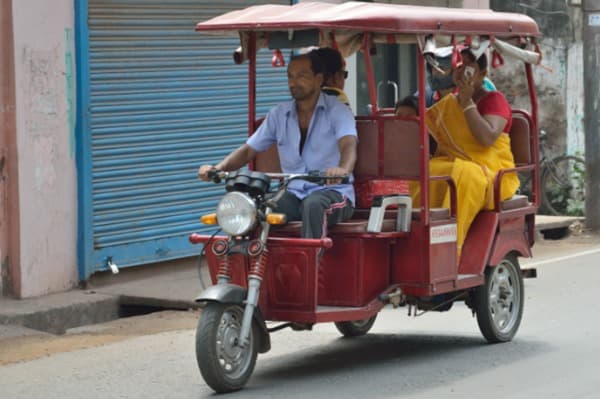
Absolutely. The electric tuk tuk is the future. Electric rickshaws (often called e-rickshaws) are gaining massive popularity. In fact, they are gaining popularity in India faster than electric cars. There are already over a million battery-powered three-wheelers on the roads in Asia.
Why are they the sustainable alternative?
- Zero Emissions: They help clean up the city streets.
- Quiet Operation: They reduce noise pollution significantly.
- Low Operating Cost: Electricity is cheaper than gasoline, diesel, or even CNG.
As a manufacturer, we focus on high-quality components. A EV5 Electric passenger tricycle is designed to offer the same utility as a traditional tuk tuk but with better reliability and comfort. The electric motors require less maintenance than combustion engines. For fleet owners, this means more profit. The unique tuk tuk charm remains, but the technology is modern.
How Does Fuel Efficiency Impact the Profitability of Three-Wheelers?
For a driver or a fleet owner, fuel efficiency is everything. Traditional auto rickshaws running on gasoline or diesel have volatile operating costs. When oil prices go up, profits go down. CNG helped stabilize this, as prices of CNG are generally lower and more stable.
However, electric tuk-tuks offer the best efficiency. The cost per mile for an electric tricycle is a fraction of a gas-powered one. Many auto drivers who switch to electric find they take home more money at the end of the day because they aren’t spending it at the fuel pump.
Also, maintenance costs play a role in profitability. A four-stroke engine has hundreds of moving parts. An electric motor has very few. Fewer parts mean fewer breakdowns. For B2B buyers like Mark, choosing a fleet of electric tuk tuks is a smart financial decision. Our Electric cargo tricycle HJ20 is built to maximize this efficiency for logistics.
Why Are These Vehicles Considered a Vital Mode of Transport in Developing Countries?
In many parts of the world, especially in developing nations, the auto rickshaw is not a luxury; it is a necessity. Public transport like buses and trains can be overcrowded or unreliable. Private cars are too expensive for most people. The tuk tuk fills this gap perfectly.
They serve as a flexible mode of transport. They provide:
- Last-Mile Connectivity: Getting people from the bus station to their doorstep.
- Affordable Travel: Cheaper than a standard taxi.
- Employment: Driving a rickshaw is a primary source of income for millions.
In cities like Jakarta (where they operate outside of jakarta city limits now due to regulations) or Cairo, the tuk tuk keeps the economy moving. It is a common means of transportation that the working class relies on. Without these three-wheelers, these cities would grind to a halt.
What Should Fleet Owners Look for When Choosing Between Traditional and Electric Models?
If you are looking to invest in a fleet, the choice between rickshaws or tuk-tuks powered by gas versus electricity is crucial. While traditional auto rickshaws (like the Bajaj or Ape) have a long history and established mechanics, the tide is turning.
Here is what you should consider:
- Infrastructure: Is there easy access to charging or CNG stations?
- Regulation: Are diesel vehicles being banned in your target city? (Many are).
- Cost: Electric has a higher upfront cost but lower running cost.
- Image: Using eco-friendly electric tuk tuks boosts your brand image.
For cargo needs, a vehicle like our Van-type logistics electric tricycle HPX10 offers a modern, enclosed solution that protects goods better than an open tuk tuk. Fleet owners should look for durability, battery warranty, and availability of parts. Dealing with a reliable Chinese manufacturer directly can often ensure you get the best specs for your needs.
Will We See More Tuk Tuks on Western Roads in the Future?
Interestingly, tuk tuks have become a trendy item in the West too. While not a primary mode of transportation, they are popping up in the USA and Europe. They are used for:
- Tourism: Touring a historic city center.
- Marketing: Mobile coffee shops or food trucks.
- Short Distances: Campus transport or resort shuttles.
As the world looks for smaller, greener vehicles, the tuk tuk concept—small, lightweight, three wheels—is making a comeback. We might not see the loud, smoky two-stroke versions, but the modern, sleek electric tuk-tuks fit perfectly into the vision of future smart cities. Whether it is transporting people or delivering packages, the three-wheeler is here to stay.
Summary
- Understand the Names: A rickshaw is human-powered, an auto rickshaw is motorized, and tuk tuk is the popular nickname derived from the engine sound.
- Global Reach: From the Bajaj in India to the tuk tuk in Thailand, these vehicles are a common sight across Asia, Africa, and South America.
- Evolution: The industry has moved from cycle rickshaws to noisy two-stroke engines, then to cleaner four-stroke and CNG, and now to electric motors.
- Sustainability: Electric rickshaws are essential to reduce air pollution and improve air quality in crowded cities.
- Business Value: For fleet owners, electric tuk tuks offer superior fuel efficiency and lower maintenance costs compared to gasoline or diesel models.
- Versatility: Whether carrying three passengers in the back or hauling cargo, three-wheelers are the ultimate flexible urban vehicle.
Post time: 01-21-2026