
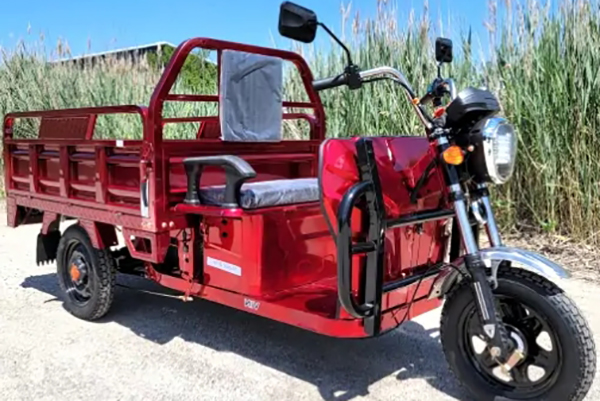
A Power trike for adults is a three-wheeled vehicle designed to provide powered transportation with a more stable standing position than a conventional two-wheel motorcycle or scooter. Depending on the model, it may use electric or fuel-powered propulsion and may be configured for personal travel, mobility, leisure riding, passenger transport, or light cargo use.
For many riders, the appeal of a power trike is its three-wheel layout, upright seating, easier low-speed balance, and practical carrying capacity. However, a three-wheel configuration does not remove the need for safe riding skills. Braking, cornering, load placement, road conditions, and local vehicle requirements must all be considered before purchase and use.
What Is a Power Trike for Adults?
A power trike is a motorized tricycle intended for adult riders. It generally has one wheel at the front and two at the rear, or two wheels at the front and one at the rear. The vehicle may have a motorcycle-style handlebar, a steering wheel, a step-through frame, a seat with back support, a cargo platform, or an enclosed passenger area.
Models can differ widely in:
- Power source
- Motor or engine output
- Maximum speed
- Seating capacity
- Cargo configuration
- Battery or fuel capacity
- Suspension system
- Brake system
- Wheel size
- Body design
- Road-use classification
Because these features vary, the correct Power trike for adults should be selected according to the rider’s intended use rather than appearance alone.
Why Adults Choose Power Trikes
Power trikes can serve practical and recreational needs. Common reasons for choosing one include:
Easier Low-Speed Balance
A three-wheel layout can make starting, stopping, parking, and low-speed movement easier for riders who do not want to support a two-wheel vehicle with their feet at every stop.
Comfortable Seating
Many adult trikes provide a larger seat, backrest, foot platform, or relaxed riding position. This may be helpful for commuting, local errands, sightseeing, or riders who value comfort.
Cargo Capability
Some models include rear baskets, cargo racks, boxes, delivery compartments, or utility platforms. A cargo-capable power trike may be useful for small-business delivery, market trips, farm or campus transport, and local logistics.
Passenger Options
Certain models are designed with dedicated passenger seating. If passengers will be carried, verify that the model is designed and approved for that purpose and that it includes suitable seating, footrests, load capacity, and braking performance.
Practical Mobility
A power trike can be a practical choice for local routes where a full-size car is unnecessary and a conventional two-wheel motorcycle is not preferred.
Electric vs. Fuel-Powered Power Trikes
The right power source depends on the route, charging or fuel access, distance, load, maintenance capability, local rules, and operating cost.
| Factor | Electric Power Trike | Fuel-Powered Power Trike |
|---|---|---|
| Daily operation | Suitable where charging is convenient | Suitable where fuel access is convenient |
| Noise | Typically quieter during operation | Usually produces more engine noise |
| Maintenance | Fewer engine-related maintenance items | Requires routine engine and fuel-system maintenance |
| Range planning | Depends on battery capacity, load, terrain and riding conditions | Depends on fuel capacity, efficiency and route conditions |
| Charging or refueling | Requires suitable charging access and time | Requires fuel availability |
| Purchase decision | Review battery, controller, motor and warranty | Review engine, drivetrain, fuel system and service support |
Actual performance should always be confirmed for the exact model. Do not rely on generic range, speed, or payload claims when comparing adult power trikes.
Important Features to Check Before Buying
Payload Rating
Payload should include the rider, passenger, cargo, accessories, and any installed equipment. Do not assume that a large rear basket means the trike can safely carry a large load.
Ask for the manufacturer’s rated total load and, where relevant, the rated cargo load.
Braking System
Braking performance is critical on a three-wheel vehicle. The design of the trike affects how weight transfers during braking. Check the brake type, brake distribution, parking-brake arrangement, service access, and availability of replacement parts.
Before riding, practice braking in a safe, open area and become familiar with the vehicle’s handling.
Cornering and Stability
A trike does not lean and turn in the same way as a two-wheel motorcycle. High speed, sharp steering input, uneven road surfaces, slopes, and poorly secured cargo can affect stability.
Reduce speed before turns, avoid abrupt maneuvers, and follow the manufacturer’s instructions for the specific model.
Battery or Engine System
For electric models, review battery voltage, capacity, charging time, battery warranty, charger compatibility, storage guidance, and local service support.
For fuel-powered models, review engine type, displacement, fuel consumption, maintenance schedule, spare-parts availability, and after-sales service.
Suspension, Tires and Ground Clearance
Route conditions matter. A trike used on paved urban streets may need different suspension, tires, and ground clearance from a trike used on rough roads, agricultural land, resort grounds, or delivery routes.
Seating and Rider Fit
Check seat height, back support, handlebar reach, foot position, passenger arrangement, and ease of getting on and off the vehicle. A short test ride, where available, can help confirm rider comfort and control.
Power Trike for Adults: Buyer Checklist
Before requesting a quotation, prepare the following information:
- Intended use: commuting, leisure, cargo, passenger, or business transport
- Required daily distance
- Road and terrain conditions
- Rider and expected cargo weight
- Passenger requirement
- Electric or fuel-powered preference
- Required maximum speed
- Storage space and parking conditions
- Local charging or fuel access
- Required body color, cargo box, canopy, or accessories
- Local registration, licensing, insurance, and road-use requirements
- Required spare parts and after-sales support
This information helps suppliers recommend a suitable configuration instead of providing a generic model.
Safety and Legal Considerations
A Power trike for adults may be classified differently depending on its motor type, power, speed, weight, seating arrangement, and country or local jurisdiction. It may be treated as a bicycle, electric vehicle, moped, motorcycle, motor tricycle, mobility vehicle, or another category.
Before purchase or use, confirm:
- Registration requirements
- Driver’s license requirements
- Insurance requirements
- Helmet requirements
- Passenger rules
- Road, lane, path, or sidewalk restrictions
- Vehicle lighting and signaling requirements
- Maximum speed and power limits
- Import and local certification requirements
Always secure cargo, inspect tires and brakes before riding, and avoid exceeding the rated load. A cargo rack is not automatically a passenger seat.
Maintenance Tips for Adult Power Trikes
Regular maintenance helps protect safety, performance, and operating life.
Check these items routinely:
- Tire pressure and tire condition
- Brake response and brake-fluid condition where applicable
- Lights, indicators, horn, and mirrors
- Steering response
- Fasteners, frame, and cargo mounts
- Battery charge, connector condition, and charger compatibility for electric models
- Engine oil, fuel system, and drive components for fuel-powered models
- Suspension and wheel alignment
- Cargo box, canopy, and passenger-seat mounting points
If the trike develops unusual noise, vibration, braking changes, steering pull, battery issues, or loss of power, stop using it until the cause has been inspected.
Conclusion
A Power trike for adults can provide practical, comfortable, and flexible transport for commuting, leisure, cargo work, and local mobility. Its three-wheel configuration can simplify low-speed handling and support useful cargo or passenger options, but safe operation still depends on suitable design, correct loading, controlled cornering, dependable braking, and regular maintenance.
The best model is the one that fits your daily route, rider needs, load requirements, power preference, service access, and local legal conditions.
For Power trike for adults product information and configuration support, please contact us: https://www.autotrikes.com/contact-us/
FAQ
What is a Power trike for adults?
A Power trike for adults is a motorized three-wheeled vehicle designed for adult transportation, leisure, mobility, cargo use, or passenger use, depending on the model.
Are power trikes easier to ride than motorcycles?
They can be easier to balance at low speed because they have three wheels. However, their cornering and braking behavior differs from a two-wheel motorcycle, so riders should learn the handling characteristics of the specific model.
Can a power trike carry cargo?
Some models are designed for cargo use, but the cargo must remain within the manufacturer’s rated load limit and be securely fastened.
Is an electric or fuel-powered power trike better?
The better option depends on daily distance, route conditions, charging or fuel access, load requirements, maintenance needs, operating cost, and local regulations.
Does a power trike require registration or a license?
Requirements vary by location and vehicle classification. Confirm local registration, licensing, insurance, helmet, and road-use rules before purchase or operation.
Post time: 10-30-2026