
The transition to sustainable transit is reshaping local logistics globally. Whether you operate a fleet in a developing nation or distribute commercial vehicles to eager entrepreneurs, analyzing the massive success of the Mayuri e rickshaw offers invaluable insights. This article breaks down its pricing, battery efficiency, and payload capabilities. By studying this leading brand, profit-driven logistical thinkers can make better sourcing decisions, understand the true value of CKD (Complete Knock Down) imports, and build highly profitable electric fleets in their own markets.
How Does the Mayuri Rickshaw Compare to Standard Electric Auto Models in India?
When you look at the explosive automotive shift happening right now, India serves as the perfect blueprint for the rest of the world. The popularity of the Mayuri brand, manufactured by Saera Auto, has grown rapidly from Delhi all the way to the rural stretches of Uttar Pradesh. But how does it stack up against a standard passenger model?
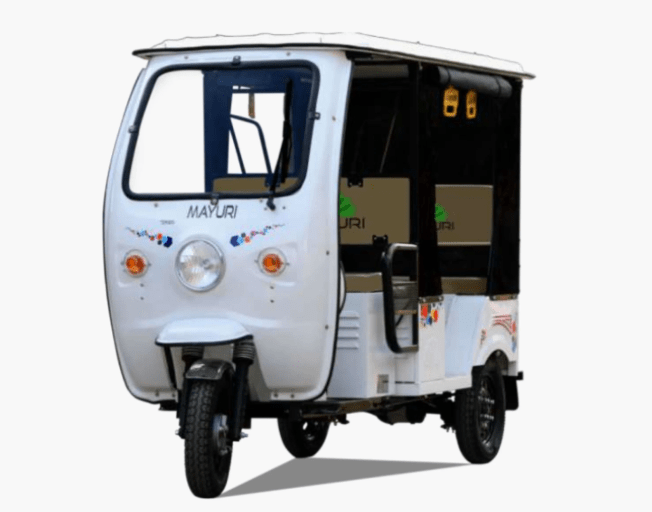
First, we must understand the core design of an electric auto. A standard auto rickshaw was historically loud, smoky, and vibrated heavily. Modern electric vehicles change this entirely. A Mayuri rickshaw is built with a reinforced tubular chassis designed specifically to carry multiple passengers without the heavy engine block of older models. This creates a balanced, stable vehicle. For global distributors, this is the exact type of product architecture you want to look for when sourcing from manufacturing hubs.
By comparing these models, you realize that a successful e-rickshaw must prioritize passenger comfort and structural integrity. A standard imported vehicle might look similar on the outside, but the internal welding and steel thickness determine its lifespan. In the world of commercial vehicles, downtime is the enemy of profit. Choosing a durable model ensures your fleet stays on the road.
What is the Exact Price and Rs Lakh Value of a Mayuri E-Rickshaw?
Price is always the biggest factor for any business owner. When assessing the Mayuri e rickshaw, you have to look at the numbers closely. In the domestic market, the price of these units generally falls between 1.10 lakh and 1.50 lakh Rs, depending heavily on the specific variant and local taxes.
For an international distributor looking to import similar vehicles, translating this price into your local currency is just the first step. You also have to calculate the landed cost. This is where the magic of CKD (Complete Knock Down) shipping comes in. If you buy a fully assembled vehicle, you are mostly paying to ship empty air inside the container. By sourcing a dismantled product, you can fit triple the amount of units in a 40HQ container, drastically lowering your per-unit price.
| Cost Factor | Fully Assembled (SKD) | Unassembled (CKD) |
|---|---|---|
| Units per 40HQ Container | 20 – 25 | 50 – 65 |
| Shipping Cost per Unit | High | Very Low |
| Local Assembly Labor | Minimal | Moderate |
| Import Duties | Higher (Classified as Vehicle) | Lower (Classified as Parts) |
When you purchase smart, the true value of your investment skyrockets. A lower landed price means you can offer competitive retail pricing while maintaining a healthy profit margin for your business.
How Does Battery Charge and Charging Time Affect Your Vehicle Range?
The heart of any electric vehicle is its battery. If the battery fails, the vehicle stops, and the driver loses money. Therefore, understanding battery dynamics is critical. The typical Mayuri e-rickshaw utilizes deep-cycle lead-acid batteries, though lithium options are becoming more common.
A standard lead-acid setup takes a good amount of charge time. You are generally looking at a charging time of 6 to 8 hours to reach 100% capacity. Because of this, most fleet drivers charge their auto overnight. A full charge typically yields a range of 80 to 100 kilometers, depending on the weight of the load and the terrain. This range is incredibly efficient for inner-city passenger routes where the daily travel distance rarely exceeds 70 kilometers.
"Range anxiety is easily cured by matching the right battery chemistry to the driver’s daily route. You don’t always need an expensive lithium pack if your daily route is short and predictable."
If you are sourcing a fleet, you must decide between lead-acid and lithium. Lead-acid provides a cheaper initial price, making the vehicle easier to sell to low-income drivers. Lithium costs more upfront but offers faster charge rates and a longer overall lifespan.
Is the Mayuri Grand or Mayuri Pro Star Better for Passenger Mobility?
When expanding a fleet, choosing the right model variant is essential. Looking at the Mayuri Grand and the Mayuri Pro Star, we see two distinct approaches to passenger mobility. The Mayuri Grand is often built for maximum comfort, featuring better suspension systems and wider seating. It is the premium choice for higher-paying commuter routes.
On the other hand, the Mayuri Pro Star is recognized as a rugged workhorse. It is designed to maximize passenger count while minimizing maintenance. The type of model you choose should directly reflect the environment you operate in. Do your customers want a premium ride, or do they just need the most affordable ticket from point A to point B?
For those looking to import top-tier mobility solutions, examining similar models is a smart move. For instance, the Electric passenger tricycle K03 offers incredible features for urban transport, matching the robust design philosophy seen in the top Indian variants.
Why Choose an Eco-Friendly EV Over a Traditional CNG Bajaj Auto Rickshaw?
For decades, the standard Bajaj auto rickshaw has ruled the streets. Many of these older models run on CNG (Compressed Natural Gas) or petrol. So, why are smart fleet owners switching to an eco-friendly EV? The answer comes down to the total cost of ownership and the future of fuel.
A traditional CNG auto requires constant maintenance. You have to change the oil, replace spark plugs, and service the engine. In contrast, an electric auto rickshaw has a remarkably simple drivetrain. An electric motor has very few moving parts. There is no oil to change, no exhaust system to rust, and no engine tuning required.
Furthermore, the cost of electricity per kilometer is vastly lower than the cost of CNG or petrol. Even when factoring in the price of replacing the battery every year or two, the EV wins easily. It provides a quiet, vibration-free experience that passengers prefer, while putting more daily profit into the driver’s pocket.
Can a Mayuri E Rickshaw Loader Handle Heavy Commercial Vehicles Work?
While passenger models get a lot of attention, the real unsung hero of the local economy is the loader. A Mayuri e rickshaw designed for cargo is a completely different beast than its passenger counterpart. These commercial vehicles are built to haul heavy loads, from fresh agricultural produce to heavy building materials.
A quality loader variant features a reinforced rear axle, heavy-duty leaf spring suspension, and a high-torque electric setup. They need to handle payloads ranging from 400kg to sometimes over 700kg. When a driver overloads an electric cargo carrier tricycle, the chassis must not bend, and the motor must not burn out.
If your distribution business focuses on logistics, offering a strong cargo option is vital. Consider exploring an advanced Auto-unloading electric cargo carrier tricycle HPZ20. Models with auto-unloading features save immense amounts of manual labor, making them a premium, high-demand product for farmers and construction crews alike.
What Power and Motor Specification Defines the Future of Electric Vehicles?
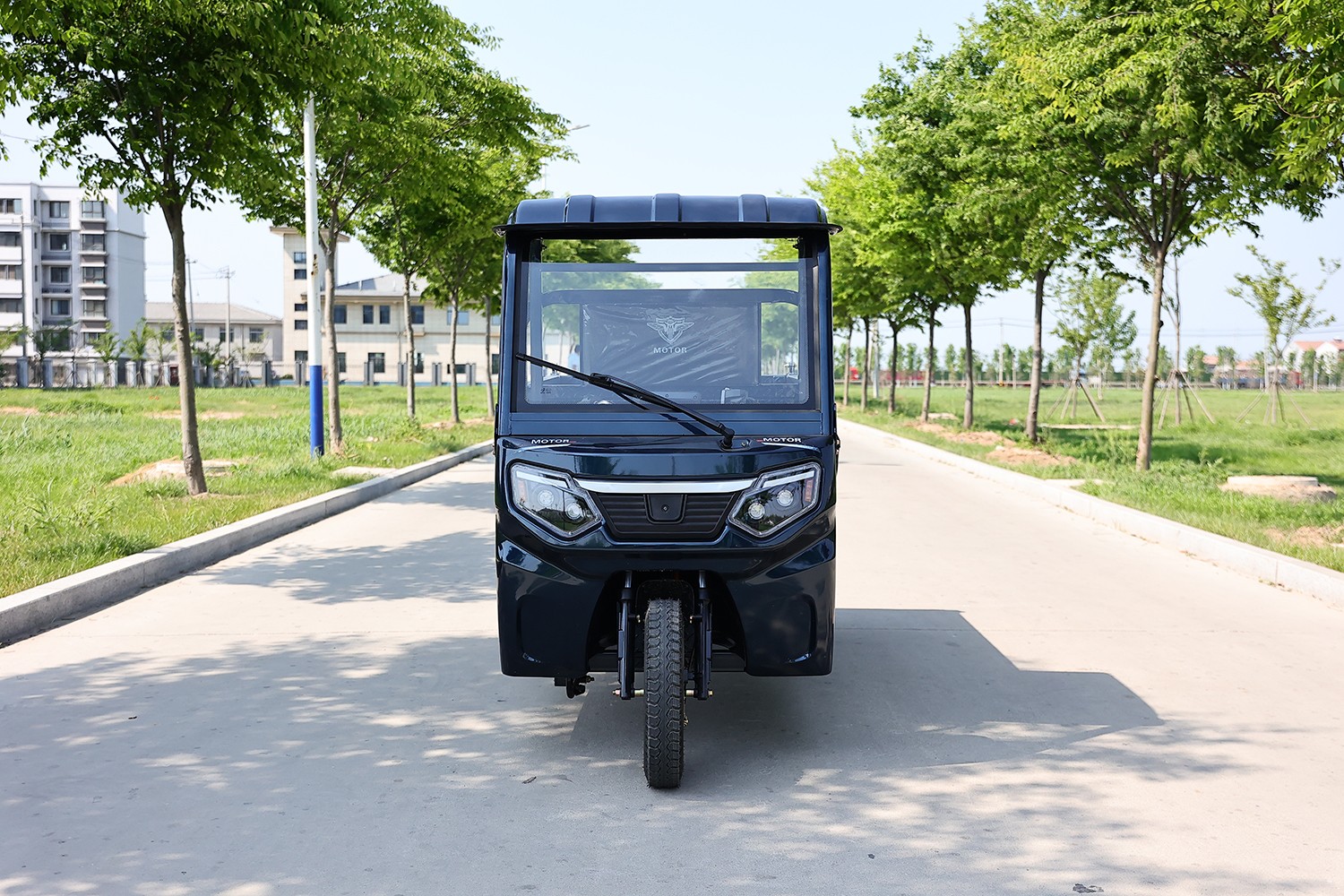
You cannot judge an electric rickshaw by its paint job; you have to look at the motor specification. The motor is what translates electrical power into physical movement. In the current market, standard passenger three-wheelers typically utilize brushless DC (BLDC) motors ranging from 1000W to 1500W.
The future of electric vehicles in this category relies on smart controllers and efficient power delivery. A higher wattage motor gives you a higher top speed, but it drains the battery faster. Therefore, manufacturers focus heavily on torque. High torque allows the vehicle to climb steep hills even when fully loaded.
When you import an e-rickshaw, you must verify the motor and controller combination. A mismatched controller will overheat, leaving your customer stranded. Always ask your supplier about the waterproof rating of the motor and whether the controller has built-in thermal protection.
How Does the Ride on Indian Roads Shape the Product Standard?
It is a known fact that Indian roads can be incredibly unforgiving. Potholes, unpaved dirt tracks, and flooded streets during monsoon season are a daily reality. Because vehicles like the Mayuri e-rickshaw were born in this environment, they have set a very high global product standard for toughness.
To provide a smooth ride, these vehicles rely on dual front shock absorbers and robust rear leaf springs. If a vehicle can survive the daily abuse of an overloaded route in a busy city center, it can survive almost anywhere in the world. This is why many global buyers look for chassis designs that mimic this proven durability.
If you are sourcing for a market in Africa or South America where road conditions are similarly tough, you need a durable frame. A flimsy imported frame will crack at the weld points within months. Always demand electrophoresis anti-rust treatment and thickened steel tubing.
What Business Value Do These Three-Wheelers Bring to Fleet Owners?
The business value of operating an electric fleet cannot be overstated. Fleet owners love predictability. With a traditional gas-powered auto fleet, a fleet manager has to worry about fluctuating fuel costs and unexpected mechanical breakdowns. With three-wheelers powered by electricity, the daily operating costs are flat and predictable.
As a distributor or fleet company, you generate value by offering a reliable brand that drivers trust. Drivers want a vehicle that starts every morning without fail. When you provide a reliable e-rickshaw, driver retention increases. You spend less time managing breakdowns and more time expanding your fleet size.
Furthermore, many local governments now offer subsidies and tax breaks for electric vehicles. This drastically lowers the barrier to entry. By aligning your business with this green revolution, you position yourself as a forward-thinking leader in local transport.
Ready to Purchase? How to Source the Right Type of E-Rickshaws for Your Market
Making the final purchase decision requires careful planning. Whether you want to replicate the success of the Mayuri e rickshaw in your own country or introduce a brand new fleet of loaders, you need the right manufacturing partner.
First, consider the type of vehicles your local market demands. Do they need an enclosed cabin for rain? Do they need an Electric cargo tricycle HJ20 for last-mile logistics? Define the core feature every variant must have.
Next, secure a solid warranty. A reliable supplier will provide a warranty on the motor, controller, and battery. Finally, insist on excellent packaging for shipping. If you buy CKD parts, the supplier must pack the fragile plastic pieces carefully so they do not arrive scratched or cracked.
Key Takeaways for Sourcing Electric Rickshaws
- Evaluate the Price and Packaging: Always compare the SKD and CKD price. CKD offers massive shipping savings and lowers your per-unit cost significantly.
- Understand Battery Range: Match the battery chemistry (lead-acid vs. lithium) and charging time to the daily kilometer range your drivers actually need.
- Prioritize Payload and Power: Choose a motor specification with high torque, especially if you are sourcing a cargo loader variant.
- Demand a Durable Ride: Ensure the chassis is built to the tough standard required by harsh, uneven roads, utilizing thick steel and proper suspension.
- Calculate Total Value: Look beyond the initial purchase price. Factor in the low maintenance costs and high business value of an eco-friendly EV fleet.
- Choose the Right Type: Whether passenger mobility or heavy cargo, select a product variant that perfectly solves your customer’s specific daily challenges.
Post time: 05-27-2026